
Anker S5000 and EcoFlow TITAN 5000 sit in the same class of high-capacity LFP backup power systems, so the right choice comes down to how you plan to use them at home. Both offer around 5 kWh of stored energy, but they differ in output power, solar input, expansion strategy, size, and day-to-day practicality. Before buying, focus on three checkpoints that have the biggest impact on satisfaction: how long the unit will run your loads, whether it can handle demanding appliances and recharge fast enough, and what you actually get for the price over years of ownership. Looking at those details first will help you avoid paying for capacity, power, or features that do not match your backup needs.
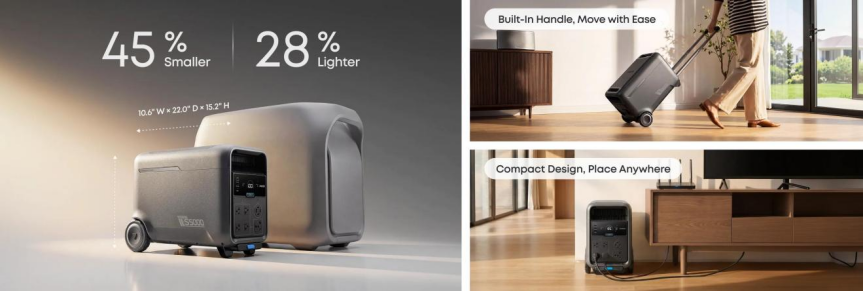
Battery capacity is very close on paper, so runtime differences will usually come from your load rather than the battery label. Anker Solix S5000 offers 5,024Wh, while EcoFlow TITAN 5000 provides 5,017.6Wh, effectively the same starting reserve for backup use. In real-world terms, either unit can cover essentials like a refrigerator, router, lights, fans, and device charging for many hours, but heavy resistive loads will drain both much faster. To estimate runtime, divide usable watt-hours by the total watts of the appliances you want to run. If your priority is long coverage for modest loads, the small capacity gap is not a deciding factor. Your appliance mix matters more than the spec sheet.
Both systems use LFP chemistry, which is the right baseline for long-term home backup because it offers better cycle durability and thermal stability than older lithium chemistries. Anker Solix S5000 lists 10,000 cycles, a notably strong durability figure for frequent use. EcoFlow TITAN 5000 is designed for a service life of more than 10 years and also uses automotive-grade low-internal-resistance LFP cells. Expansion is where separation becomes clearer. TITAN 5000 supports external expansion batteries, with up to five units stacked in one system for a maximum of 30 kWh. If you expect your backup needs to grow beyond essentials into longer outage coverage, that built-in expansion path is a meaningful advantage.
Output power determines whether a battery system is merely convenient or truly capable during an outage. Anker Solix S5000 provides 4,500W max AC output and 4,500W bypass mode power, which is enough for many household circuits and common essentials. EcoFlow TITAN 5000 steps up to 7,200W rated output with 120V/240V split-phase support, and it can deliver up to 5kW on a single 120V circuit through X-Boost 2.0. That higher ceiling makes it better suited for demanding loads, including direct support for a compatible 3-ton central air conditioner. If you want stronger whole-home style performance or fewer compromises when multiple appliances start at once, TITAN 5000 has the clear edge.
Charging speed and input flexibility matter just as much as output if you expect to recharge quickly between outages or rely on solar daily. Anker Solix S5000 supports up to 4,300W charging on a single unit, including 1,800W AC at 120V, 4,500W max at 240V, dual solar inputs totaling 3,000W, and up to 4,500W DC generator input. It also offers a UPS switchover time of up to 10 ms. EcoFlow TITAN 5000 supports up to 4kW of solar input through a built-in MPPT controller and works with up to 99% of generators. If solar harvesting is your top priority, TITAN has the higher PV ceiling. If broader charging modes matter more, Anker is more flexible.
Value is not just the sticker price; it is how much usable performance and lifespan you get for the money. Since pricing and warranty terms can change by retailer, focus on what remains consistent: capacity is nearly equal, but the two systems deliver value in different ways. Anker Solix S5000 stands out if you want strong cycle life, fast charging options, and solid backup performance without paying extra for higher output you may never use. EcoFlow TITAN 5000 justifies a potentially higher upfront cost if you need 7.2kW output, 120V/240V split-phase power, and expansion up to 30kWh. Buy based on workload and future plans, not headline specifications alone.
Safety and convenience shape ownership long after installation day. Anker Solix S5000 weighs 97 lb and measures 10.6 × 22.0 × 15.2 inches, making it easier to reposition than the heavier 119 lb TITAN 5000, which measures 24.4 × 13.3 × 10.1 inches. EcoFlow adds clear safety credentials with UL 9540 certification, UL 9540A testing, UL 1741 compliance, and IP20 protection, plus LFP cells engineered to reduce heat under full load. Anker, however, offers very low 8.8W idle power and useful everyday I/O, including USB-A, USB-C, and a 100W USB-C port. If portability and lighter handling matter most, Anker wins. If formal safety credentials matter most, TITAN stands out.
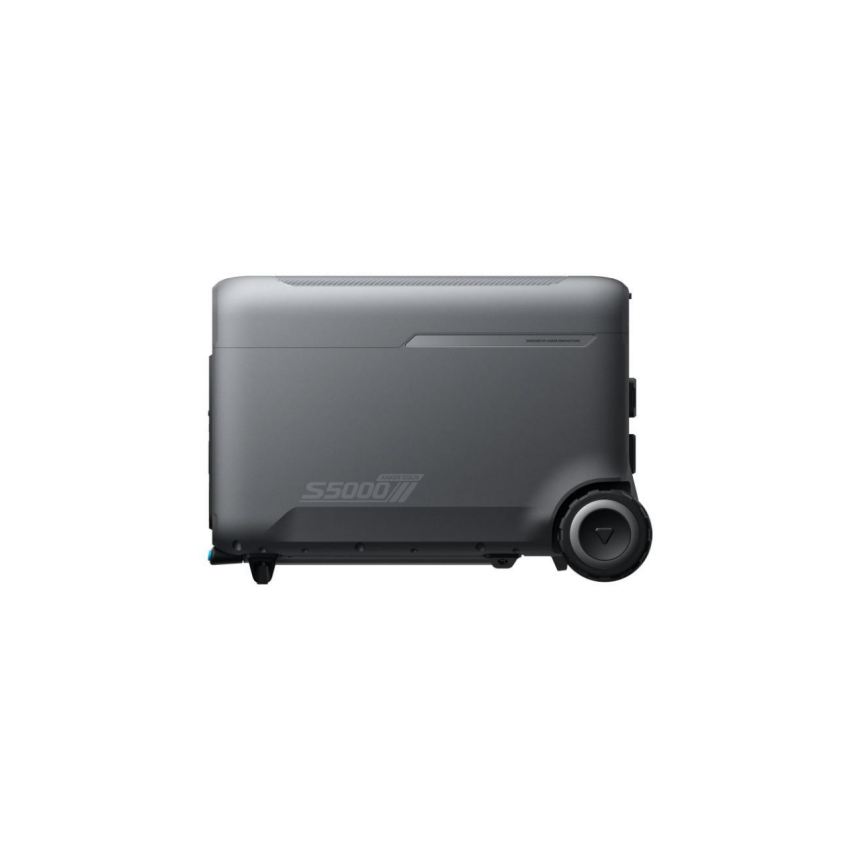
For most buyers, the best way to compare Anker S5000 and EcoFlow TITAN 5000 is simple: check runtime needs, required appliance power, and long-term value before anything else. If you want a lighter unit with nearly identical base capacity, very strong cycle life, flexible charging options, and practical everyday usability, Anker Solix S5000 makes a compelling case. If your priority is higher output, split-phase capability, stronger solar input, and a clearer path to large-scale expansion, EcoFlow TITAN 5000 is the more capable system. The better buy is the one that matches your outage plan. Choose Anker for efficient, flexible backup. Choose TITAN 5000 for heavier home loads and future growth without compromise.